AC and Evaporative Cooler Leak Cleanup in Las Vegas, NV
Rooftop swamp cooler and AC condensate leaks flood valley ceilings all summer. The drying team finds the source, protect the room, and dry it out, with crews on-site day or night.
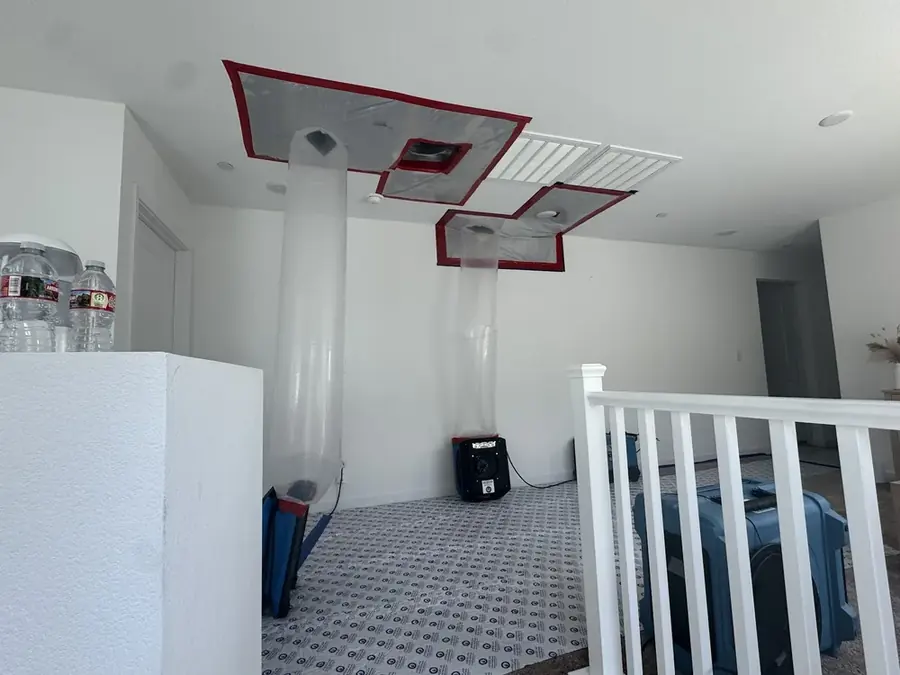
How the crew handles AC in Las Vegas
Call & dispatch
A real valley crew answers 24/7 and the nearest team rolls with pumps, air movers, and moisture meters.
On-site assessment
The crew finds the source and moisture-maps how far the water traveled, including under tile and into wall cavities.
Extract & dry
The extraction crew pulls the standing water, then runs air movers and LGR dehumidifiers to the IICRC S500 dry standard.
Verify & document
The drying team logs moisture readings until the structure is dry, then documents the loss for your carrier.
A wet ceiling in the valley in summer usually points to one of two things on the roof: a swamp cooler that is overflowing, or a central AC whose condensate line has clogged. Both send water straight down through the ceiling into hallways and closets, and both are among the most common warm-season calls. The response team finds the source, protect the room, and dry it out, with crews on-site day or night.
How swamp coolers and AC systems flood a ceiling
Many older valley homes cool with a rooftop evaporative cooler. It holds a small reservoir fed by a float valve and a copper supply line. When that float sticks open or the line corrodes, water spills onto the roof deck, finds a seam, and drips into the room below.
Central air conditioners make water too. As the system cools, humidity condenses on the coil and drains through a condensate line. In the dusty desert air that line clogs with grime and algae, backs up, and overflows into a ceiling or down an interior wall.
- A rooftop swamp cooler float valve that sticks open and overflows
- A corroded copper cooler supply line leaking onto the roof deck
- A clogged or disconnected AC condensate drain line backing up
Why it happens every summer
These leaks are seasonal: the equipment only runs hard when it is hot, exactly when the parts that fail are under the most strain.
- Float valves, supply lines, and condensate drains that sat dry all winter get pushed hard
- Desert dust and algae build up in condensate lines over a single cooling season
- A cooler or air handler on the roof or in a hot attic can leak for hours before the stain shows
The federal Department of Energy notes that evaporative coolers need regular seasonal service, and in the valley skipping it is the single most common reason a cooler floods a ceiling.
The AC and cooler leak cleanup
The mitigation team starts by finding where the water is actually coming from, because drying a ceiling under a cooler that is still leaking wastes everyone's time. Once the source is stopped, the restoration team protects the room and dry the ceiling cavity and the walls below.
- Source tracing on the roof cooler, the condensate line, and the air handler before anything is opened
- Water extraction and removal of only the drywall and insulation that cannot be dried in place
- Structural drying of the ceiling cavity and walls with daily readings
- Coordination with a Nevada contractor for the ceiling repair, and a pointer to the cooler or condensate fix
The ceiling itself is handled to the same standard as any ceiling leak, and if the water sat long enough to grow mold in the cavity, the mold remediation crew treats it before the ceiling is closed.
Preventing the next warm season leak, and insurance
Most cooler and AC ceiling leaks are preventable with a little seasonal attention. Have the swamp cooler serviced before summer, and clear the AC condensate line so it drains properly. A float valve or a cleared drain line costs far less than a dried and repaired ceiling.
A sudden cooler or AC leak that damages a ceiling is usually covered, while long-term seepage from a leak left unattended often is not. The tech who responds documents the source and the damage for your carrier. The EPA notes that drying wet material within 24 to 48 hours keeps mold from taking hold.
Water coming through your ceiling from the cooler or the AC? Call now. A crew is on-site day or night.
☎ Call (702) 478-2029How a Las Vegas water loss is handled
Rapid local response
A Las Vegas water damage pro picks up the line 24/7, any hour of the night.
Valley-wide dispatch
Crews cover Clark County, from Summerlin to Henderson, day or night.
IICRC S500 drying standard
Structural drying to the IICRC S500 standard, not just surface drying.
Claim-ready documentation
Timestamped photos and daily moisture logs, so the claim file has what an adjuster needs.
Structural rebuild
Nevada contractors handle the structural rebuild after drying.
Water damage coverage across the whole Las Vegas valley.
The Las Vegas water damage pros dispatch valley-wide across Clark County. Here is the coverage, down to the ZIP.
The Las Vegas water damage pros cover the whole valley and Clark County, day or night, with rapid local response.
Coverage includes Summerlin, Henderson, North Las Vegas, Spring Valley, Enterprise, Green Valley, Centennial Hills, Paradise, and Downtown.
See every neighborhood and ZIP covered ›