Flood and Flash Flood Cleanup in Las Vegas, NV
From a monsoon flash flood to an overflowing wash, the drying team pumps out, muck out, sanitize, and dry flooded Las Vegas homes, with local crews on-site day or night.
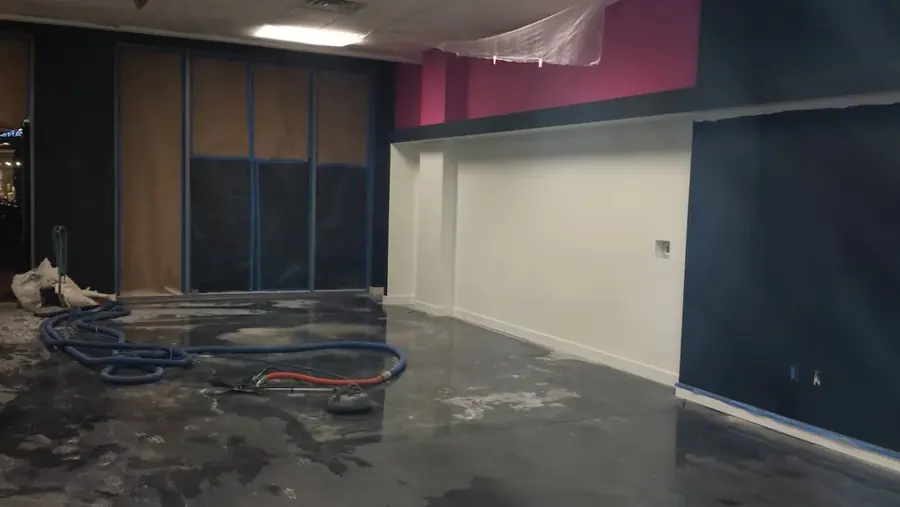
How the crew handles Flood in Las Vegas
Call & dispatch
A real valley crew answers 24/7 and the nearest team rolls with pumps, air movers, and moisture meters.
On-site assessment
The crew finds the source and moisture-maps how far the water traveled, including under tile and into wall cavities.
Extract & dry
The extraction crew pulls the standing water, then runs air movers and LGR dehumidifiers to the IICRC S500 dry standard.
Verify & document
The drying team logs moisture readings until the structure is dry, then documents the loss for your carrier.
Las Vegas gets little rain, but the summer monsoon comes all at once, dropping more water in an hour than the hard desert ground can absorb. It sheets off the pavement into garages and ground floors within minutes. The extraction crew runs flash-flood cleanup across the valley, with a local crew on-site day or night to pump out, muck out, and dry.
The flooding Las Vegas actually gets
The valley averages about four inches of rain a year, so nothing here is built to soak up a sudden downpour. When a monsoon microburst stalls over a neighborhood between July and September, the runoff races downhill, pools in low streets, and finds the lowest opening into your home. In the desert the storm and the flood are almost the same event.
The valley drains through desert washes and the channels and basins built by the Clark County Regional Flood Control District, but homes near a wash or a low crossing still take on water in a hard storm, and it arrives thick with silt.
- Water off the Las Vegas Wash, Flamingo Wash, Tropicana Wash, and Duck Creek during a monsoon cell
- Street runoff that ponds at low crossings and dips, then pushes into garages and ground floors
- Ground-level condos and single-story homes in Paradise, Spring Valley, and Sunrise Manor
- Sheet flow off caliche hardpan and pavement that cannot absorb a fast rain
The flash-flood cleanup process
Flood cleanup is not a mop and a fan. The water arrives dirty and soaks everything at floor level at once, so the job is a full pump-out, a muck removal, a sanitize, and a monitored dry-down.
The silt is the part people underestimate. A monsoon flood leaves a fine desert mud that settles under cabinets, behind baseboards, and inside wall cavities, exactly where mold takes hold if it is left. The response team scrapes and haul it out rather than rinsing it toward a drain.
- Submersible pumps and truck-mounted units for standing water
- Shovel and haul the silt, mud, and storm debris
- Antimicrobial treatment on every surface the water touched
- Water extraction and structural drying to finish the dry-out from the slab up
Flood water is not clean water
Never treat a flash flood like a clean spill. Monsoon runoff mixes street oil, yard chemicals, animal waste, and whatever the wash carried, which puts it in the Category 2 to 3 range where contact is a real health risk.
Porous material that sat in it, such as carpet, pad, the base of drywall, and upholstered furniture, usually has to come out rather than be dried in place. Know your exposure before the next storm: check your address on the FEMA Flood Map Service Center and read the federal flood safety guide.
- Do not walk or wade through moving flood water
- Keep power off in any wet area until a pro clears it
- Photograph the loss before anything is moved
Insurance and your flood claim
What catches valley homeowners off guard: a standard homeowners policy does not cover flooding from surface water or a wash overflow. That comes from a separate NFIP flood policy, while sudden internal water like a burst supply line usually falls under homeowners.
Whichever applies, the mitigation team documents the loss and write the scope your adjuster expects so the claim keeps moving. If the water came up through a floor drain, that is a sewer backup, and the sewage and black water cleanup crew documents that cause so the right coverage answers.
A monsoon flood spreads by the minute. Call now and a valley crew is on the way.
☎ Call (702) 478-2029How a Las Vegas water loss is handled
Rapid local response
A Las Vegas water damage pro picks up the line 24/7, any hour of the night.
Valley-wide dispatch
Crews cover Clark County, from Summerlin to Henderson, day or night.
IICRC S500 drying standard
Structural drying to the IICRC S500 standard, not just surface drying.
Claim-ready documentation
Timestamped photos and daily moisture logs, so the claim file has what an adjuster needs.
Structural rebuild
Nevada contractors handle the structural rebuild after drying.
Water damage coverage across the whole Las Vegas valley.
The Las Vegas water damage pros dispatch valley-wide across Clark County. Here is the coverage, down to the ZIP.
The Las Vegas water damage pros cover the whole valley and Clark County, day or night, with rapid local response.
Coverage includes Summerlin, Henderson, North Las Vegas, Spring Valley, Enterprise, Green Valley, Centennial Hills, Paradise, and Downtown.
See every neighborhood and ZIP covered ›